Headline Sponsors









Headline Sponsors
With skills shortages continuing to challenge manufacturing and engineering employers, a growing number of Leeds firms are including T Level industry placements as part of their strategy to build a sustainable pipeline of talent.
At Leeds City College, the city’s largest provider of T Levels, demand for the Engineering and Manufacturing course is already strong. This academic year’s 70-strong cohort is full, with applications mounting up for next year.
Clayton Stott, the college’s head of Engineering and Manufacturing, says that reflects a wider shift in technical education. “T Levels are very much part of the FE landscape, as we see qualifications like BTECs being phased out,” he says. “It’s a well-structured course that’s been designed in collaboration with employers, and it’s here to stay.”
A core element of the two-year qualification, equivalent to three A Levels, is a substantial industry placement that gives students the opportunity to apply their learning in a real working environment, while offering employers a practical way to engage with future talent.
Leeds City College is currently working with around 25 employers across West Yorkshire, from SMEs to larger manufacturers, many of whom are now seeing clear benefits.
“For employers, one of the biggest advantages is the opportunity to assess someone over a longer period of time,” says Clayton. “Whether that’s one day a week or delivered in a block, it gives businesses a genuine ‘try before you buy’ opportunity.”
That extended time in the workplace enables employers to go beyond a CV or interview, building a clearer picture of a young person’s potential; not just their technical ability, but their attitude, reliability and fit within a team. In some cases, that has already led to students progressing into apprenticeships or employment with their placement company.
But the value of a T Level placement is not just about recruitment. “Students also bring fresh perspectives,” Clayton adds. “They’re learning the latest industry practices and they’re not afraid to ask questions about how things are done. That can be really positive for a business.”
For many employers, placements also provide an opportunity to strengthen links with local education providers and play a more active role in shaping the future workforce.
“There’s also a real feel-good factor,” he says. “By offering a placement, you’re helping young people take their first steps into manufacturing and engineering and supporting the future of the sector.”
Importantly, placements are designed to be flexible, allowing businesses to take part in a way that works for them. Some employers choose a regular day-release model, while others opt for a more intensive block placement.
“There’s a lot of support available from the college,” says Stott. “We work closely with employers to structure the placement in a way that best fits the needs of the business and the industry feedback we’re getting is that the placements are providing real value for everyone involved.”
“Placements are a win-win for employers and students”
Multi-award-winning Leeds-based medical technology business, Brandon Medical, has been hosting placements for engineering and manufacturing T Level students since the early days of the qualification and, says the firm’s HR manager Ingrid Laws, the team have found the process to be both positive and an educational journey for the business.
The firm believes it’s important to approach student placements with the overall aim of driving positive change for the future of the industry, rather than seeing the students as a potential source of free labour.
“We have found that if you go into this, as employer, with a generous and flexible attitude, you will get a lot more out of the placement and so will the young people involved,” says Ingrid.
“Students are learning lots of theory at college but putting that into practice in the real world is different and it’s crucial that young people get workplace experience.
She adds: “Their T level placement is likely to be the first time they interact with adults in a corporate environment and are treated like grown-ups. Going from being told what to do, to having to problem-solve independently, is a massive transition and it’s vital in equipping students with the workplace skills and attitude that will help them become the future talent the manufacturing and engineering industry needs.”
Ingrid has more advice for businesses considering hosting T level student placements: “Be clear about what is on offer for students. What area of manufacturing or engineering does your business operates in and what can students expect to be involved in on their placement?
“We’ve seen that organising a project the students can really engage with and see the progress they have made is the most positive approach for both the students and for us as a business.”
She adds: “Although you absolutely can’t guarantee that hosting a student will result in a new apprentice or employee, it’s a resoundingly positive thing to do and there is so much to be gained from inviting young people into your workplace.
“As well as fresh ideas and their familiarity with the latest industry practice they are learning at college, 16-and-17-year-olds are streets ahead of older people when it comes to IT skills. One of our T Level students, James, did a fabulous job of creating a learning management platform during his placement, that had real value for the business.”
Ingrid is also an advocate of rewarding students financially for their efforts on their placement. “It’s an incentive for them to do well and our attitude is: why wouldn’t we pay someone who has really contributed? That’s a win win for both the business and the student.”
“Placements can be empowering for colleagues too”
Greyhound Box, whose innovative corrugated cardboard products are helping to reduce plastics in packaging, has hosted T Level placement students for two years but opted out for the current academic year.
“It’s definitely something we will return to, hopefully this September,” says managing director Louise O’Brien. “We have been focusing on our growth strategy this year and from experience, we know that if you are going to have placement students in the business, you do need to make sure their activities in the workplace are properly organised and structured, and that you have the human resources in place to be able to do that properly. That ensures that both the students and your business are getting all they can out of the placement experience.”
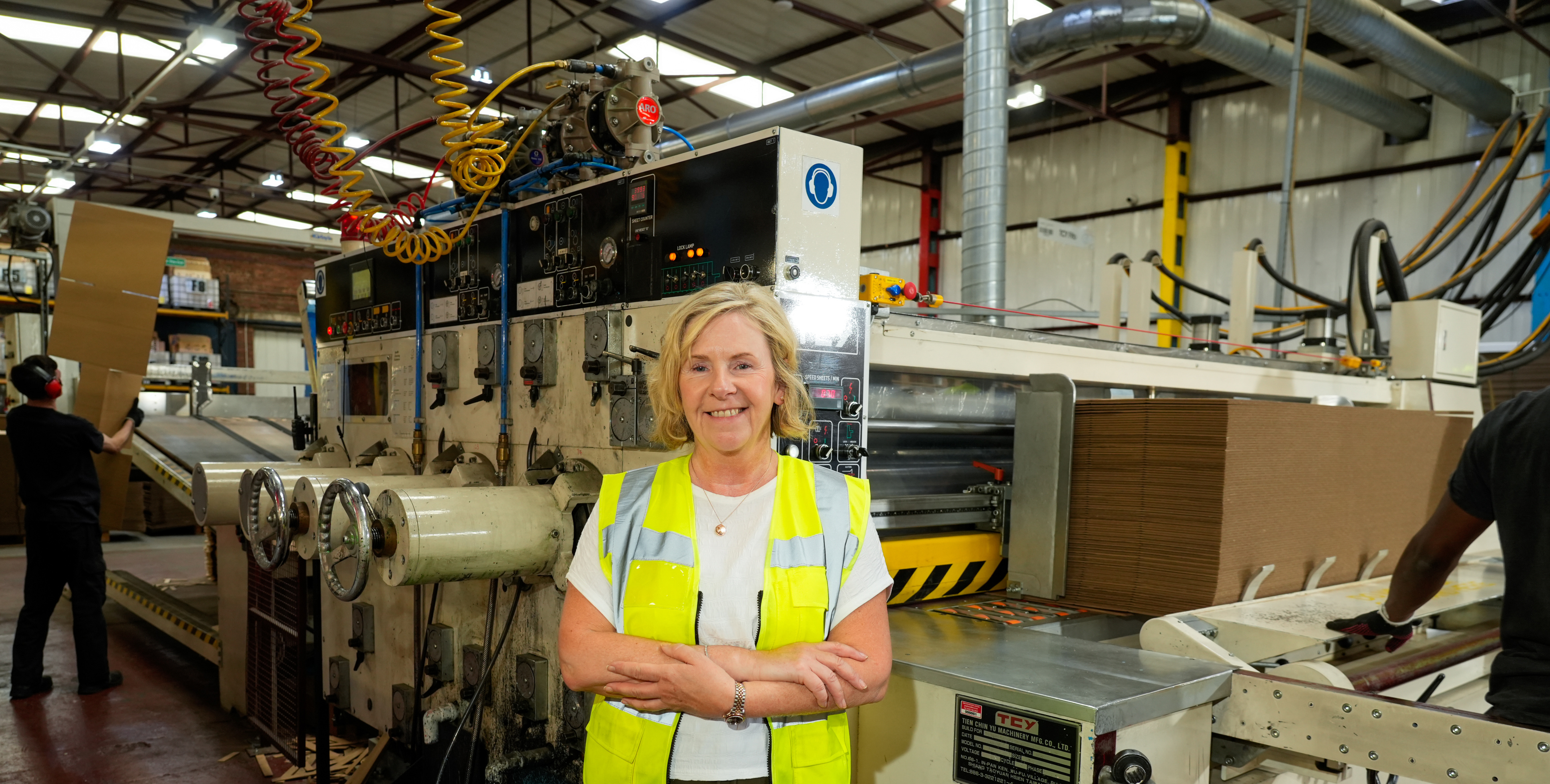
Greyhound Box, which employs 18 people at its manufacturing base in Hunslet, has run placements for four T Level students over the past three years and has seen a range of benefits. “For a start it’s great to work with such young people.
“Teenagers bring exciting, fresh ideas and ways of looking at things that may give you, as an employer, a new perspective on some of the ways you do things. For our colleagues too, being given the task of mentoring and training a young person can be very empowering and really positive.”
Louise says that Greyhound Box has built a close relationship with Leeds City College and its Engineering and Manufacturing Department. “I’d recommend any business to get involved with a local FE College that is running the relevant T Levels because they’re a great source of new talent and skills.
“They really want to help local businesses and the attitude we’ve seen at Leeds City College is really good.”